
Unit 1 - Lesson 1: Classifying Variables and Exploring Data, Introducing Statistics and Variables
What We’re Learning About
Statistics is about collecting and understanding data to answer questions, like “How tall are students?” We’re focusing on one-variable data, which looks at just one thing about people or things. Numbers need context - like who they’re from or what they mean - to make sense. For example, “5” could be 5 apples or 5 miles without context, which can lead to mistakes.
Variables are things that can change, like height or favorite color. There are two types:
• Categorical Variables: Group data into labels (e.g., dominant hand: left or right; favorite sport: soccer, basketball). Differences show up as more or fewer in each group.
• Quantitative Variables: Numbers that measure amounts.
These can be:
o Discrete: Whole numbers you can count (e.g., number of pets: 0, 1, 2). Differences are in steps.
o Continuous: Any number in a range (e.g., height in cm: 160.5, 170.2). Differences can be tiny.
Variation is how much data points differ - it's why we study statistics! If everyone were the same height, we wouldn’t need averages. For example, heights vary more than hand dominance.
--Assignment
Part 1: Warm-Up Activity
Here’s a small set of student heights (in cm) from 5 students:
• 160, 165, 170, 175, 180
Wrong Statement: "The average height is 170 cm for all students."
Tasks:
• Point out what’s wrong with this statement. (Hint: Think about how many students are included and if it fits everyone.)
• Write 1–2 sentences explaining why context (like who these students are) matters.
Part 2: Guided Practice Activity
Work with a partner. Use the data below from 10 students (from Census at School, a real student project). One partner figures out the variable types and explains variation, while the other makes a simple picture (like a tally or list). Switch roles after 10 minutes, then talk as a group.
Data:
• Dominant Hand: Left, Right, Right, Left, Right, Right, Left, Right, Right, Left
• Age (years): 15.2, 15.5, 14.9, 15.1, 15.3, 15.6, 14.8, 15.4, 15.0, 15.7
• Number of Siblings: 1, 2, 0, 1, 3, 2, 1, 0, 2, 1
Tasks:
1. Classification and Variation (Partner 1):
o Say if each variable is categorical or quantitative. For quantitative ones, note if it’s discrete or continuous.
o Write 1–2 sentences about variation for each (e.g., “Age changes a little with decimals like ……, showing small …. differences among teens.”).
o Extra Practice: Pick two things from your life (e.g., “Favorite Movie: Action, Comedy…” and “Time Spent Reading (hours): 1.5, 2.0…”). Classify them and explain their variation.
2. Representation (Partner 2):
o For Dominant Hand, make a tally or bar graph (show heights for Left/Right, e.g., sketch bars - Left: 4, Right: 6).
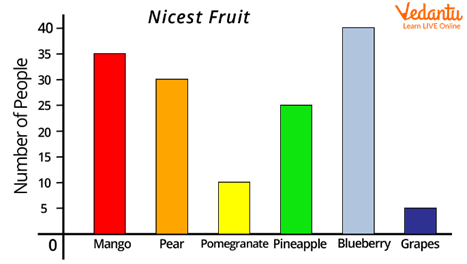
o For Age, list in order or sketch a dotplot (mark where dots go on a line from 14 to 16 - graph not provided, draw by hand to show spread).

o For Number of Siblings, tally the numbers (e.g., 0: __, 1: __, 2: __, 3: __).
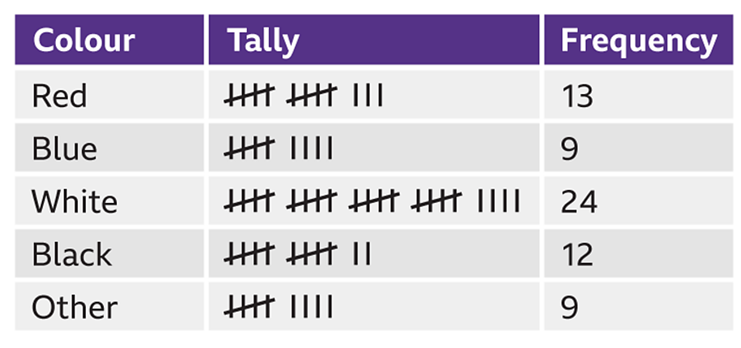
o Extra Practice: Draw a tally for “Favorite Movie” from your extra classification (e.g., Action: 3, Comedy: 2).
3. Group Discussion:
o Compare your work on types, variation, and pictures.
o Talk about: “How does variation differ across these, and why does context (like student ages) matter?” Write 2–3 sentences about what you found. (Example: “Age varies with decimals, showing small changes, while Siblings jumps in whole numbers. Context helps because it tells us these are teens, explaining why age differences are small.”)
Part 3: Independent Practice
Look at this data from a survey of 5 students:
• Eye Color: Blue, Brown, Green, Brown, Blue
• Test Score: 85, 92, 78, 88, 95
Tasks:
• Classify each variable as categorical or quantitative, and say if quantitative is discrete or continuous. Explain variation for each (e.g., “Test scores change a lot, from 78 to 95, showing different skills.”).
• Write 2–3 sentences describing the data, including how variation might look as numbers or a picture, and why context matters (e.g., “Eye color has 3 groups, which a bar graph could show. Test scores vary from 78 to 95, suggesting different student efforts in class.”).
• Extra Activity: Make up a real-life example. Create data for 5 people (e.g., “Pet: Dog, Cat…” and “Backpack Weight (kg): 4.5, 5.2…”). Classify them, explain variation, and sketch a tally (e.g., for pets—graph not provided, draw by hand).
Write why it could answer a question like “Do heavier backpacks link to pet types?”
Homework Assignment
• Gather a small dataset from home (e.g., ages of 5 family members and their favorite foods). Figure out the variable types, explain variation with context, and make a simple picture (e.g., tally or list) to share next class. (This helps you practice and prepares you for more data work.)